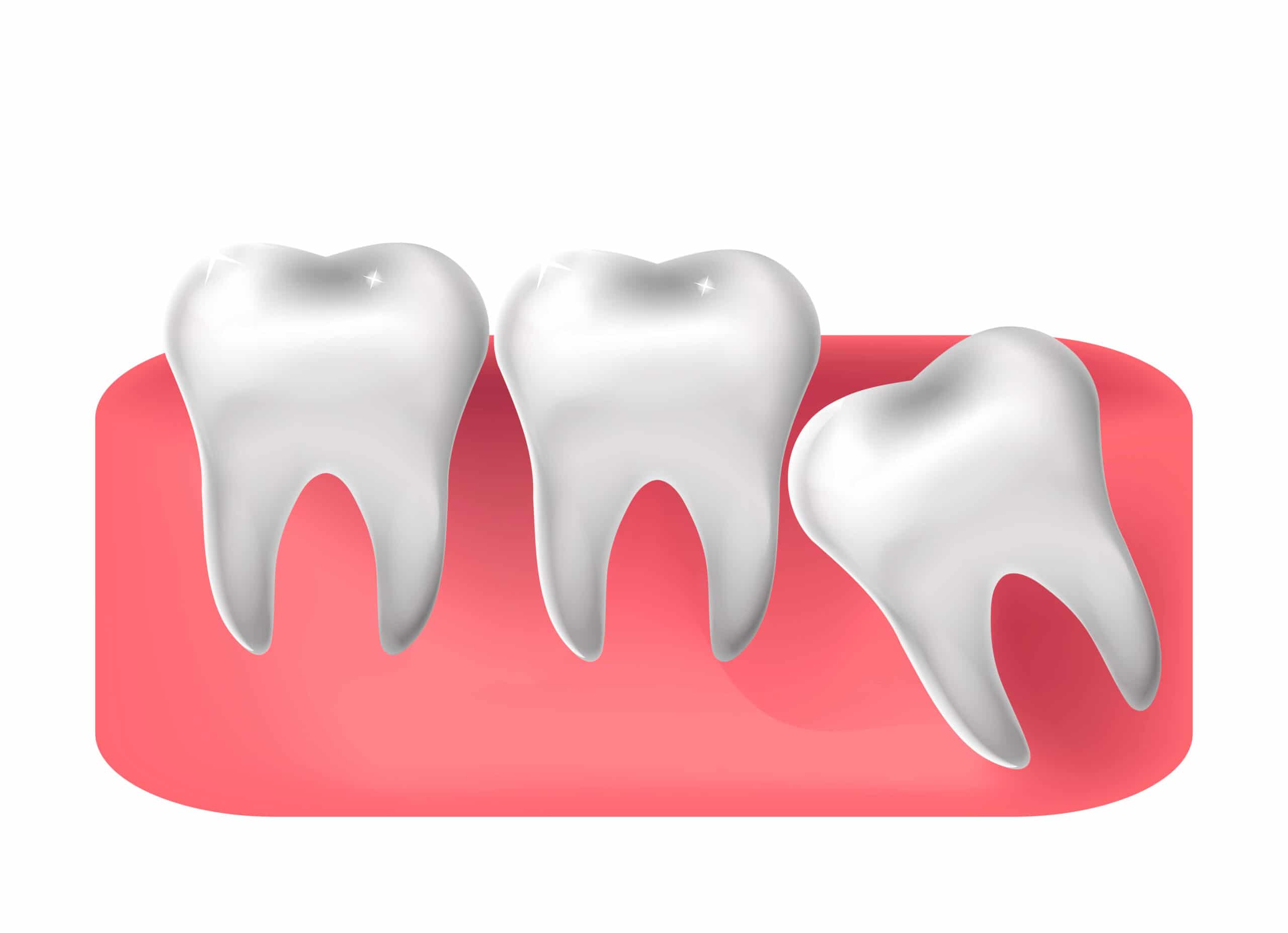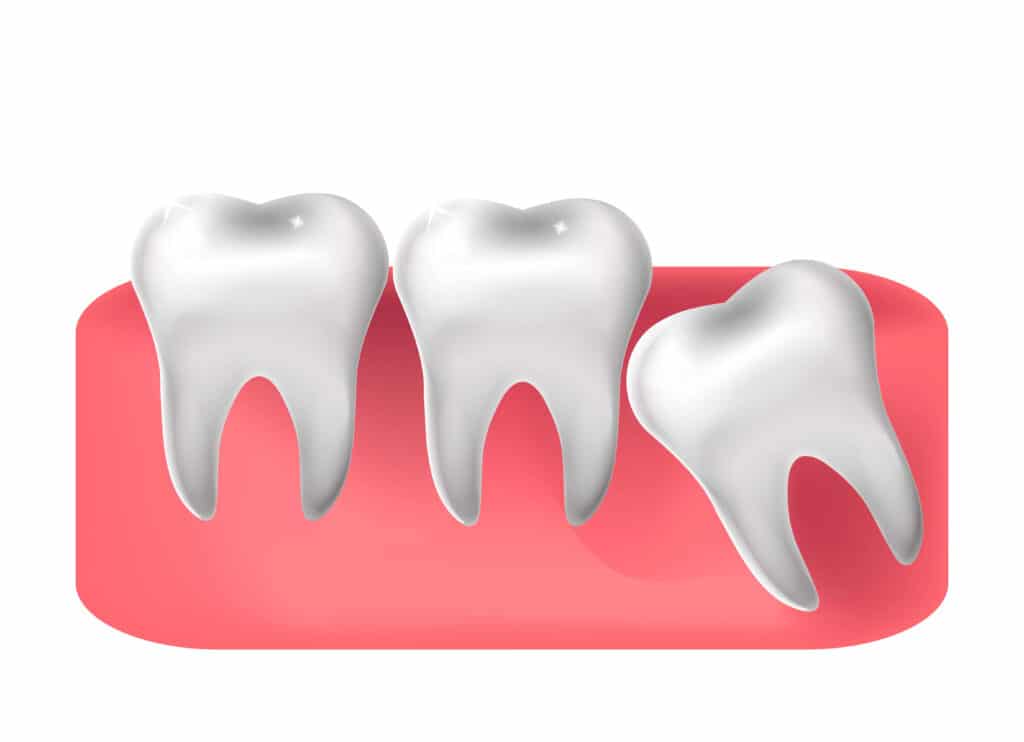
Wisdom teeth are molars which are located at the back of the mouth and in each jaw there are two (ie 2 above and 2 below). They get their name because they appear at an advanced age compared to the rest of our teeth and usually between the ages of 17 and 21.
When they appear it is normal to feel some discomfort and if they come to the surface properly, they can help you chew. However, there are cases that they create bigger problems than simple discomfort, so if you feel severe pain, visit your dentist.
Why do wisdom teeth cause pain?
The main and most common cause is lack of space. When there is not enough space in the mouth to appear on the surface, then they may appear with incorrect placement or even remain enclosed or semi-enclosed.
Enclosed are the wisdom teeth that remain in the jaw or under the gums, while semi-enclosed are those that somehow communicate with the oral environment.
What problems can be caused by the appearance of wisdom teeth?
When your wisdom teeth appear you should visit your dentist who, among other things, will monitor you for:
- Wrong positioning which can trap food and cause the formation of bacteria and consequently cavities in the teeth. Improper positioning in appearance can also cause pressure or even damage to adjacent teeth.
- Wisdom teeth that have partially appeared and give the opportunity for bacteria to penetrate the gums. This can cause an infection, which in turn can cause pain and swelling in the jaw.
- Enclosed wisdom teeth that can form a cyst. It is a rarer phenomenon, but it can cause damage to the roots of a neighboring tooth.
Your doctor will monitor their progress and advise you on the treatment of any problems that exist depending on the case. In several cases, the extraction of wisdom tooth is recommended.
When should I exptract a wisdom tooth?
However, extraction of the wisdom tooth is recommended when, among other things, there is damage that cannot be repaired, severe pain, infection, cyst, gum disease, damage to neighboring teeth. However, there are clear differences from case to case and your doctor is the one who knows and can advise you better and depending on your own.
In closing, it should be mentioned that even healthy wisdom teeth should be monitored because they are likely to have problems in the future. Proper care (brushing, flossing) is important, as are regular visits to the dentist. With regular visits we can achieve proper monitoring and have a complete picture, not only for our wisdom teeth but for our oral health in general.