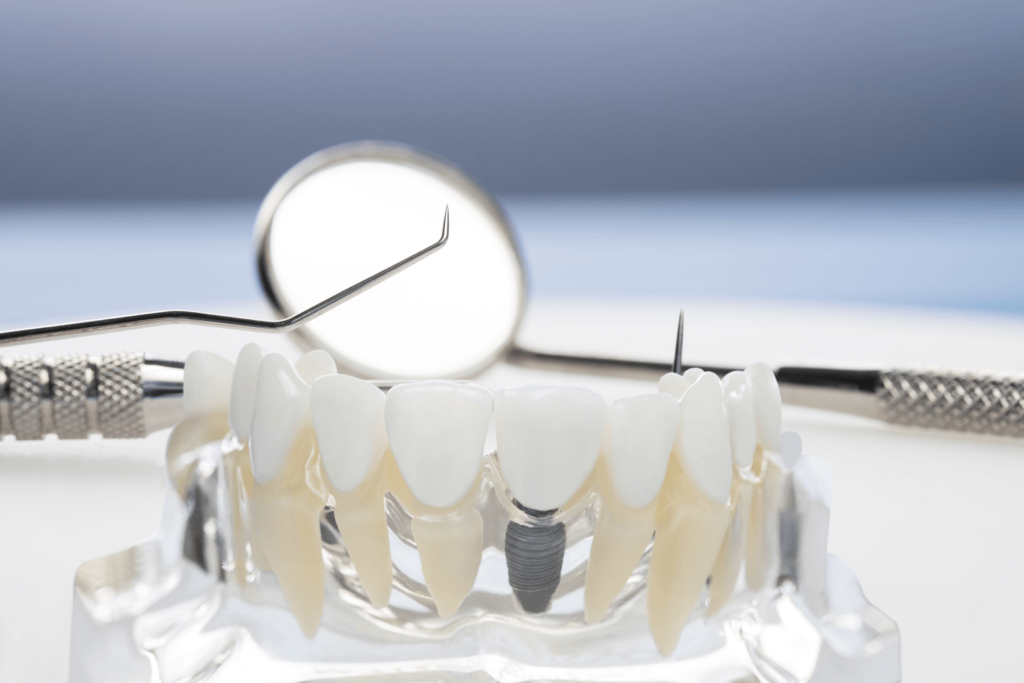
In a previous article we mentioned the importance of implants in the development of dentistry while we explained in detail, what dental implants are and how they are used. In this article we will focus on the cases where implant placement is needed and we will also refer to the way they are placed.
Dental Implants - When does one need them?
If you have lost one or more of your teeth, then you are a candidate for dental implants. However, it is important to be in good health, as there are some conditions and diseases that can affect whether dental implants are right for you. For example, uncontrolled diabetes, radiation to the jaws, smoking, alcoholism or uncontrolled periodontal disease can affect whether dental implants can integrate with your bones. It is important to inform your dentist about your medical condition (past and present) along with all the medicines you are taking, whether they are prescribed, alternative (herbs) or over-the-counter.
How is a dental implant placed?
Implant placement requires surgery that creates precision canals in the jaw, often using a surgical guide while not grinding healthy teeth at any point in the procedure. The implants are then put in place so that they are in close contact with the bone. It generally takes three (3) months for the implant to integrate with the bone before the tooth restorations can be placed and the procedure is completed.
Where and how implants are placed requires a detailed evaluation of your overall oral-jaw bone system in which the teeth operate. This will require a panoramic oral x-ray and in some cases even a CT scan. Computer-aided imaging programming ensures that dental implants can be placed in the correct position on the bone.
So this is a special process that requires knowledge and fine handling, especially if we take into account that there are some conditions and diseases that can be a deterrent to the placement of a dental implant.
But how does one know which option to replace lost teeth with dental implants is ideal for their case? While this is, of course, something that should be discussed with your dentist, in our next article we will talk about the options available.